The opponents that became part of GamesGrid history
The original GamesGrid Backgammon had its own resident family of computer opponents.
Seven belonged to the GG family: GG Forever, GG Raccoon, GG Beaver, GG Otter, GG Weasel, GG Chipmunk and GG Tutor. They formed a playing ladder from novice level to some of the strongest computer opposition available on the server.
Then there was MrHyperBot, built specifically for hypergammon using a completely different system.
And alongside them was Xbot, independently operated by Paul Magriel rather than GamesGrid itself.
For many GamesGrid members, these bots became part of the identity of the original club. Beginners practised against Chipmunk. Improving players worked their way towards Otter and Weasel. Stronger players tested themselves against Raccoon, Beaver and Forever. Tutor added feedback while you played.
This page preserves the documented story of how they worked, how strong they were and what made each of them different.
Built by GamesGrid Engineering
The GG family was developed by GamesGrid Engineering, the in-house development team of CyberArts Inc., using the GNU Backgammon engine as its foundation.
The archived documentation shows that the bots did not all require separate neural networks. Instead, GamesGrid used one underlying engine and created different playing strengths through evaluation depth and controlled weakening.
GG Raccoon, for example, used the GNU 0.13 engine at 0-ply, with no lookahead. The stronger end of the family could use deeper evaluation, although the surviving documentation does not establish the exact depth used by GG Forever.
One engine, several strengths
Three ideas defined the system.
Evaluation depth. Stronger evaluation could be created by allowing the engine to look deeper into a position.
Induced errors. The weaker bots used controlled stochastic errors. The engine still evaluated the available moves, but at a configured frequency the bot would choose a suboptimal alternative.
Massively parallel play. The bot family was built to handle many matches at once. Combined, the bots played approximately 2,000 to 4,000 matches per day, running on dedicated machines and connecting to GamesGrid through the same server infrastructure used by human players.
This gave GamesGrid a full ladder of opponents without requiring a completely different engine for every playing level.
The seven members of the GG family
The original bots used compact handles such as GGraccoon and GGchipmunk. On the new GamesGrid we write them as GG Raccoon, GG Chipmunk and so on, but the original joined handles are preserved here where historically relevant.
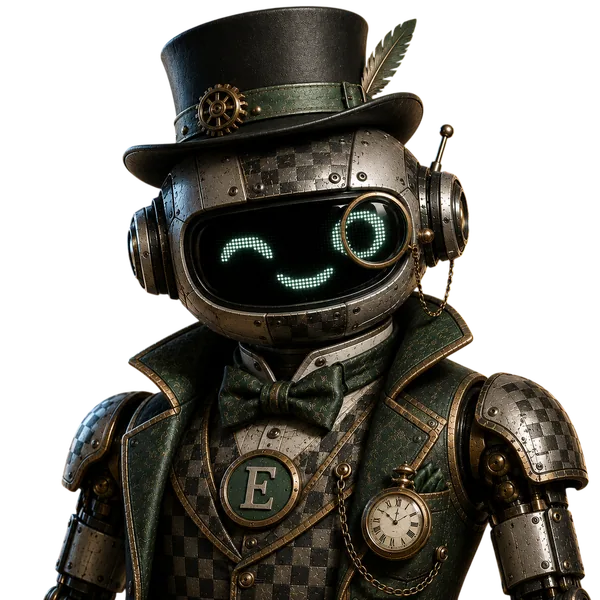
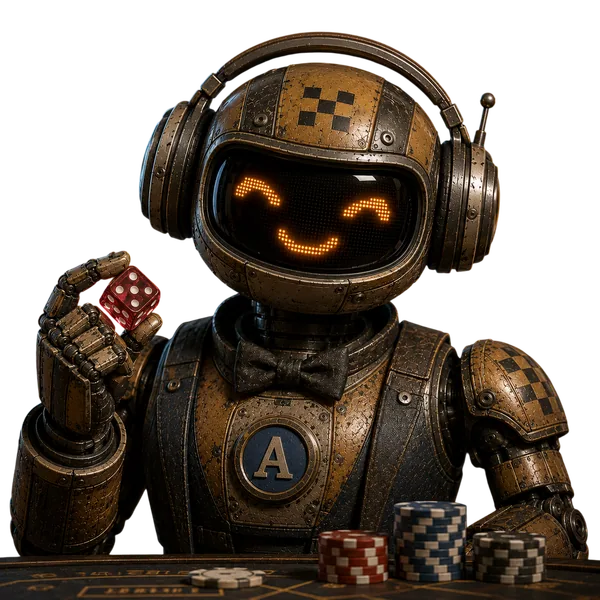
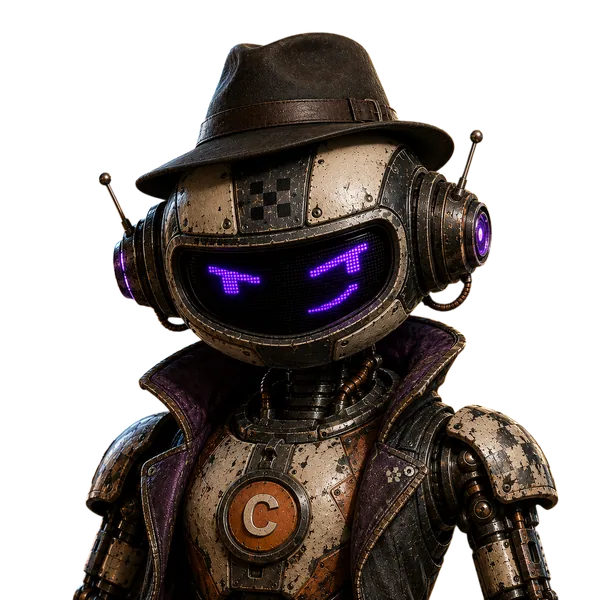
The character renders shown on each card below are new — the original 1996–2008 GamesGrid server did not ship bot avatars. Each render was modelled to the documented playing temperament of the historical bot, for this archive.
GG Forever
GG Forever sat at the top of the original ladder and was available only to Life Members.
The surviving documentation identifies Forever as using higher-tier evaluation than the other main bots, although the exact lookahead depth is not recorded clearly enough to state a specific ply setting.
Recorded Elo range: 1850 low, 1920 average, 2114 high.
GG Raccoon
GG Raccoon was the strongest bot generally available to all GamesGrid members.
It used 0-ply GNU Backgammon evaluation, with no lookahead and no induced weakening. It represented the strongest pure neural-network play before deeper search was added.
Recorded Elo range: 1850 low, 1920 average, 2114 high.
GG Beaver
GG Beaver used the same basic full-strength 0-ply engine as Raccoon, with no induced errors.
The archived material does not describe Beaver as intentionally weaker, although its recorded rating range differed slightly in practice.
Recorded Elo range: 1791 low, 1935 average, 2086 high.
GG Otter
GG Otter was the first clear step down the ladder.
It used 0-ply evaluation with induced errors calibrated towards an Elo target of approximately 1700, which GamesGrid described as Intermediate strength.
Players rated 1800 or above could not invite Otter.
Recorded Elo range: 1543 low, 1701 average, 1827 high.
GG Weasel
GG Weasel introduced errors more frequently and targeted approximately 1500 Elo, described by GamesGrid as Beginner level.
Players rated 1600 or above could not invite Weasel.
Recorded Elo range: 1410 low, 1516 average, 1652 high.
GG Chipmunk
GG Chipmunk sat at the bottom of the ladder.
It used a higher frequency of induced errors and targeted approximately 1300 Elo, the GamesGrid Novice level.
The original documentation describes this as intentional. Chipmunk was designed to give recreational players an opponent they could realistically beat.
Players rated 1400 or above could not invite it.
Recorded Elo range: 1171 low, 1275 average, 1487 high.
GG Tutor
GG Tutor was different.
It played at the same basic full-strength 0-ply level as GG Raccoon, but its purpose was instruction rather than rating competition.
When the player made a measurable error, Tutor could comment on the move during the match. It played unrated matches only, allowing members to receive engine-based feedback without putting their rating at risk.
No official Elo range was published because Tutor did not play rated matches.
More than standard backgammon
The GG family played both standard backgammon and Nackgammon, with matches available up to nine points.
Human members invited the bots directly through the GamesGrid client. Whether a bot accepted could depend on the human player's rating and whether the bot still had capacity for another simultaneous match.
Players could even control the bot's playing speed through chat commands, asking it to play more slowly or more quickly. Only the current opponent could change that setting.
It was a remarkably practical system for its time: a computer opponent that could be invited like another club member and adjusted without leaving the table.
MrHyperBot was something completely different
MrHyperBot did not belong to the GNU Backgammon based GG family.
It existed specifically for hypergammon, the three-checker backgammon variant.
Because hypergammon has a much smaller number of possible positions, Hugh Sconyers had created a database containing exact solutions for the game. MrHyperBot used that database rather than the neural-network architecture behind the other GamesGrid bots.
The archived GamesGrid FAQ therefore described MrHyperBot as a perfect hypergammon player.
It played approximately 600 to 700 one-point matches per day, all publicly visible to spectators.
Recorded Elo range: 1797 low, 1953 average, 2109 high.
A bot family that thousands of players actually used
The importance of the GG family was not only technical.
Across the original GamesGrid, the bots collectively played thousands of matches every day. They gave new members somewhere to start, improving players a ladder to climb and stronger players a readily available opponent.
Chipmunk might be your first computer opponent. Later you could graduate to Weasel and Otter. Eventually you might be sitting opposite Raccoon, Beaver or Forever.
Tutor offered something different again, helping players examine mistakes while they played. MrHyperBot gave variant specialists access to exact hypergammon play.
The bots' ratings moved considerably over time even though their underlying strength remained fixed. The archived GamesGrid documentation discussed these swings specifically, attributing them to the variance inherent in backgammon across large numbers of matches.
Their names remain. Their technology does not
The original GG bot family belongs to the 1996 to 2008 GamesGrid platform.
The original CyberArts-era implementation no longer exists as a playable system, and these historical bots are not being brought back as opponents in the new GamesGrid.
But their legacy matters.
They established the idea that GamesGrid should always have opponents waiting. They created a ladder that let people find an appropriate challenge. They showed that computer opponents could be part of the identity of the club rather than simply an anonymous difficulty setting.
The new GamesGrid takes that idea much further.
Instead of seven playing levels represented by seven bots, the new club has over 500 virtual players, each with a name, face, personality, voice and individual playing profile.
The technology has changed completely.
The idea that there should always be someone at the club ready to play has not.
Frequently asked questions about the GG bot family
How many GG bots were there in the original GamesGrid?
Eight resident bots in total — seven in the GG family (GG Forever, GG Raccoon, GG Beaver, GG Otter, GG Weasel, GG Chipmunk, GG Tutor) plus MrHyperBot, which played the hypergammon variant on a different architecture. A ninth independent bot, Xbot, was operated by Paul Magriel — see the Xbot page.
Who built the GG bots?
GamesGrid Engineering, the in-house development team at parent company CyberArts Inc. (San Francisco / Berkeley, California). They built the family on the GNU Backgammon engine — GNU's own tutorial names GGRaccoon as running GNU 0.13.
Were all the GG bots the same engine?
The GG family (Forever, Raccoon, Beaver, Otter, Weasel, Chipmunk, Tutor) used a common GNUbg-derived neural network. The difference between bots was the induced-error frequency applied to that common engine — and, for GG Forever, an additional layer of higher-tier evaluation depth. MrHyperBot was a separate architecture entirely (Hugh Sconyers's exact-play database for hypergammon).
Why did the GG bots' ratings fluctuate so much?
The same reason all backgammon ratings fluctuate: dice variance. The bots played at constant strength match to match, but across the 2,000–4,000 daily matches their ELO would drift 100+ points up or down in either direction over hundreds of matches purely from the luck inherent in the game. The 2004 GamesGrid FAQ documents this explicitly; the bots' rating swings were noticeably larger than human players' because they played so many more matches per day.
Did the GG bots get better dice than human players?
No. The original FAQ addressed this directly: bot players received dice from the same Mersenne Twister stream as every other player, in the same way as human players. Strong bots appeared luckier to the uncritical eye because, like strong human players, they arranged their checkers so that more rolls were useful to them — but the underlying distribution was uniform.
What's the difference between GG Raccoon and GG Beaver?
In documented technical terms: none. Both ran the same full-strength 0-ply GNUbg-derived engine. Beaver's published rating range (1791–2086) is marginally below Raccoon's (1850–2114), but this is within natural variance and the original FAQ does not describe them as differently configured.
What was special about GG Tutor?
GG Tutor used the same engine as GG Raccoon (full-strength 0-ply) but added per-move commentary when the player made a measurable evaluation error. It accepted unrated matches only, which let improving players solicit engine-grade feedback without rating exposure. The 2004 FAQ noted that Tutor did not yet distinguish between large and small errors — a planned future improvement that the operational lifetime of the original platform did not see implemented.
Did any of the GG bots have avatars or character art?
No. The original 1996–2008 GamesGrid bot pages were text-only FAQ documents. There were no avatars, no character portraits, no mascot illustrations. The visual identity of each bot was carried entirely by name. The renders on this page are new design made for this archive — no legacy imagery exists.
See also
Sources
- GamesGrid Backgammon FAQ pages (CyberArts Inc., 1997–2004), archived at the Internet Archive Wayback Machine: faq-GGrobots.html (2004-08-05), faq-GGtutor.html (2004-08-03), faq-hyperbot.html (2004-08-03).
- Sconyers, H. Hypergammon position database. Distributed via GamesGrid for MrHyperBot, 1997–2008.
- Albert Silver and Christian Anthon, All About GNU Backgammon — the GNU Backgammon project's official tutorial, published on gnu.org: "On Gamesgrid … a bot called GGRaccoon, using the GNU 0.13 engine and playing on a weaker setting so that it plays instantly, has achieved a rating as high as 2165."