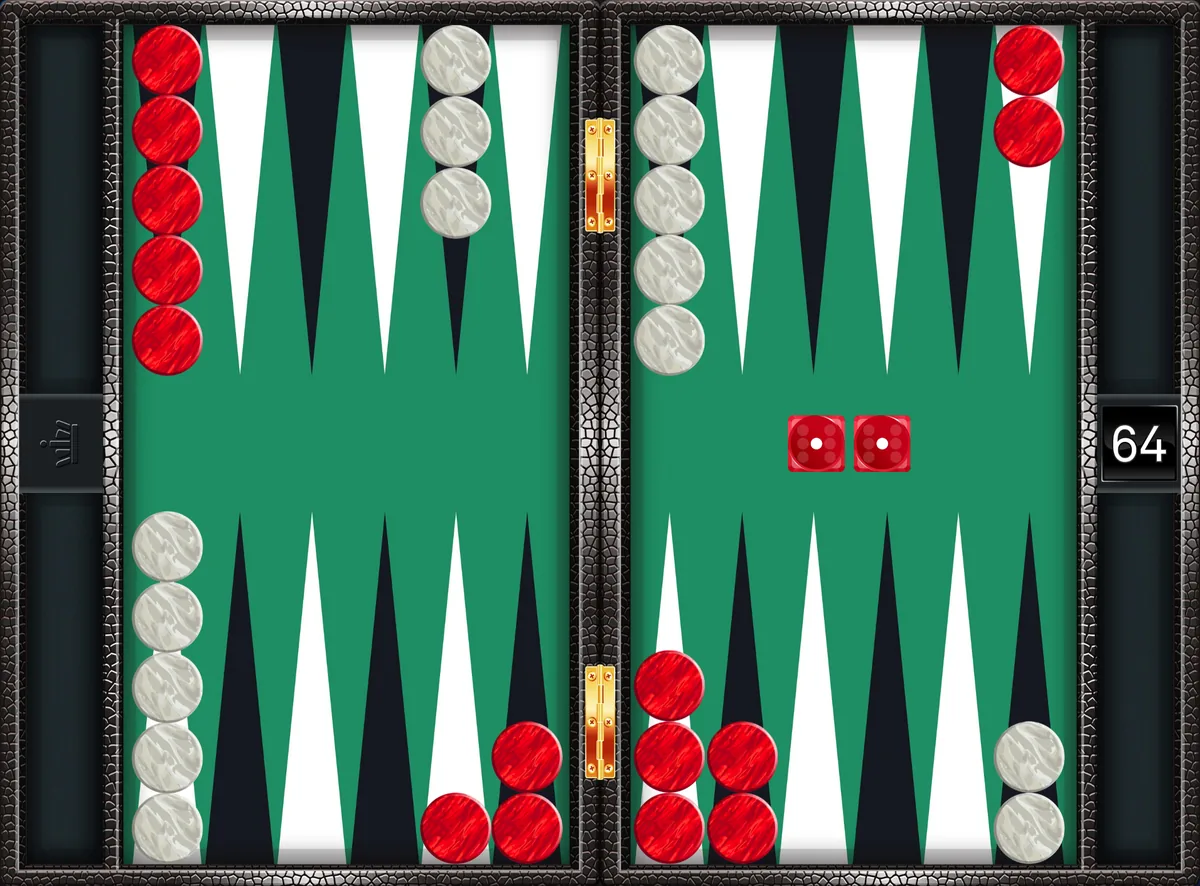
The opening of a backgammon game is the most thoroughly analysed phase of the game. Every dice combination that can be rolled on the first turn — 15 distinct non-double rolls, plus 6 doubles in non-tournament rules — has been rolled out to convergence by every major neural-network engine since the late 1990s. The results have refined, and in several cases overturned, the strategic recommendations of pre-engine theory.
This page catalogues all 15 opening rolls with their canonical plays, their recognised nicknames, the statistical rollout edges of the standard play over leading alternatives, and a structural treatment of opening replies — the second-turn position landscape that arises when the second player rolls into the 30 most-played first-turn positions.
A pair of dice produces 21 distinct rolls (6 doubles + 15 non-doubles) over 36 ordered outcomes. Doubles occur on 6/36=16.6% of all rolls. Non-doubles each occur on 2/36=5.5% of all rolls — the two dice may be ordered either way.
In tournament rules, the opening roll of a game is made by each player rolling one die, with the higher die rolling first and the combination of the two dice played as that player's opening move. This convention means doubles cannot occur on the opening roll in tournament play (a tie reroll is required). Money play often uses a different convention (both players roll both dice and doubles are kept and even auto-double the cube).
The 15 non-double opening rolls below are therefore the complete set of tournament-play opening rolls.
The 15 Opening Rolls
The table below gives the canonical play for each roll, its recognised nickname (where one exists), the principal alternative play, and the approximate rollout edge of the canonical play over the alternative, in money-game equity. Edges are measured against XG2 4-ply rollouts; values from GNU Backgammon and Wildbg agree to within ±0.005 equity.
Roll
Canonical play
Nickname
Principal alternative
Edge (equity)
6-5
24/18, 18/13
Lover's Leap
24/13 (same play, single-checker description)
Only canonical play.
6-4
24/18, 13/9
Run / Split-builder
24/14 (run all the way), or 8/2 6/2 (make 2-pt)
Three plays within 0.01 of each other: 24/18 13/9 is the usual choice; 8/2 6/2 and 24/14 are equal alternatives.
6-3
24/18, 13/10
Run / Split-builder
24/15 (full run)
Split-builder favoured over full run.
6-2
24/18, 13/11
Split / Builder
13/5 (slot the 5-point)
Split-builder favoured; the slot is meaningfully inferior.
6-1
13/7, 8/7
Make the Bar
13/7 split
The make-the-bar play is the universal canonical default.
5-4
24/20, 13/8
24/20 Split
13/8, 13/9 (two builders)
Split favoured.
5-3
8/3, 6/3
Make the 3
13/8, 13/10 (builders)
Make-the-3 strongly favoured.
5-2
13/8, 24/22
Split
13/11, 13/8 (two builders)
Split favoured.
5-1
24/23, 13/8
Split
13/8, 6/5 (slot the 5-point)
Split is the modern default; the slot is meaningfully behind in current engine rollouts.
4-3
24/20, 13/10
24/20 Split
13/10, 13/9 (two builders)
Split favoured.
4-2
8/4, 6/4
Make the 4
24/18 (split)
Make-the-4 is the universal canonical play.
4-1
24/23, 13/9
Split
13/9, 6/5 (slot the Golden Point)
Split is the modern XG2/Wildbg canonical play; the older 1970s slot heuristic is meaningfully inferior in current rollouts.
3-2
24/21, 13/11
Split-builder
13/11, 13/10 (two builders)
Split-builder favoured.
3-1
8/5, 6/5
Make the 5 / Golden Point
13/10, 6/5 (slot bar-builder)
The single strongest opening — a substantial equity advantage over any alternative.
2-1
24/23, 13/11
Split-builder
13/11, 6/5 (slot the Golden Point)
A near-tie in current rollouts; some sources marginally favour the slot, others the split. Choose by style.
A few of these rolls have stable canonical plays that have not changed since Magriel's Backgammon (1976) — the make-the-point rolls (3-1, 4-2, 5-3, 6-1) in particular. Others have been refined by engine rollout analysis and modern competitive opinion has shifted within the last twenty years: notably the 4-1 and 5-1 openings, where the 1970s pure-style preference for slotting the 5-point has been overturned by neural-network analysis in favour of the split. The 2-1 remains genuinely contested at the rollout level — the slot and split plays are close enough that either is defensible.
Note on edge values. Exact rollout equities depend on the engine, the number of trials, the truncation depth, the seed, and the variance-reduction technique applied. The framings above describe the direction of the modern engine consensus rather than committing to specific edge numbers. For published cubeless equities cell by cell, consult the eXtreme Gammon 2 or GNU Backgammon rollout database.
The fifteen openings, illustrated
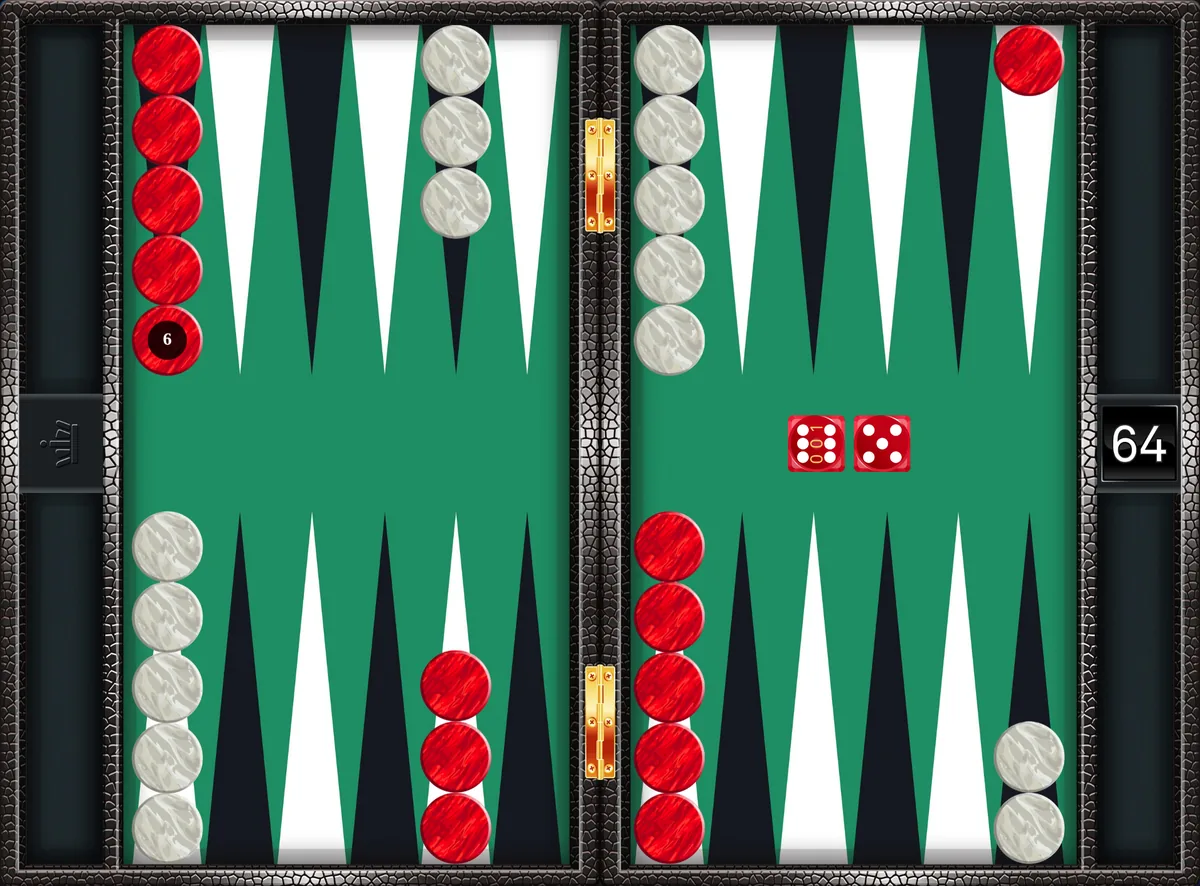
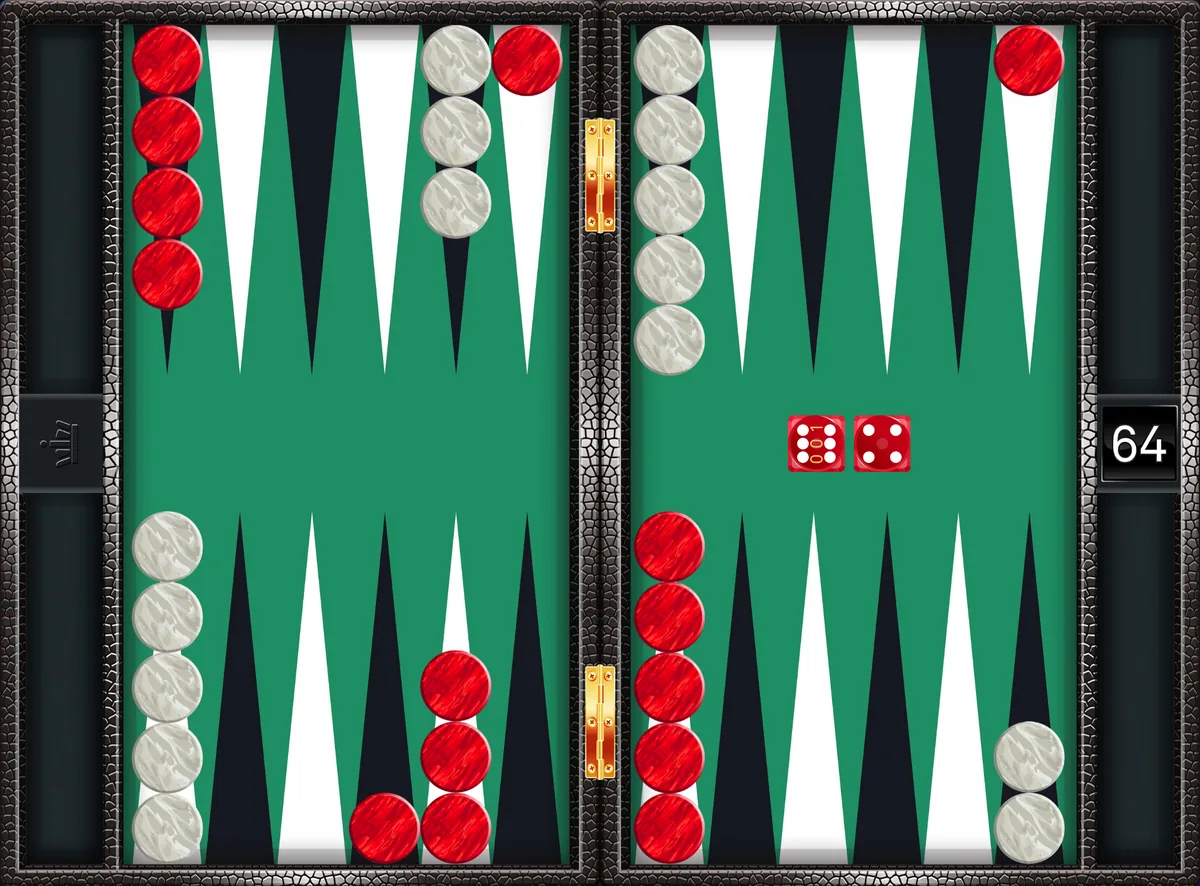
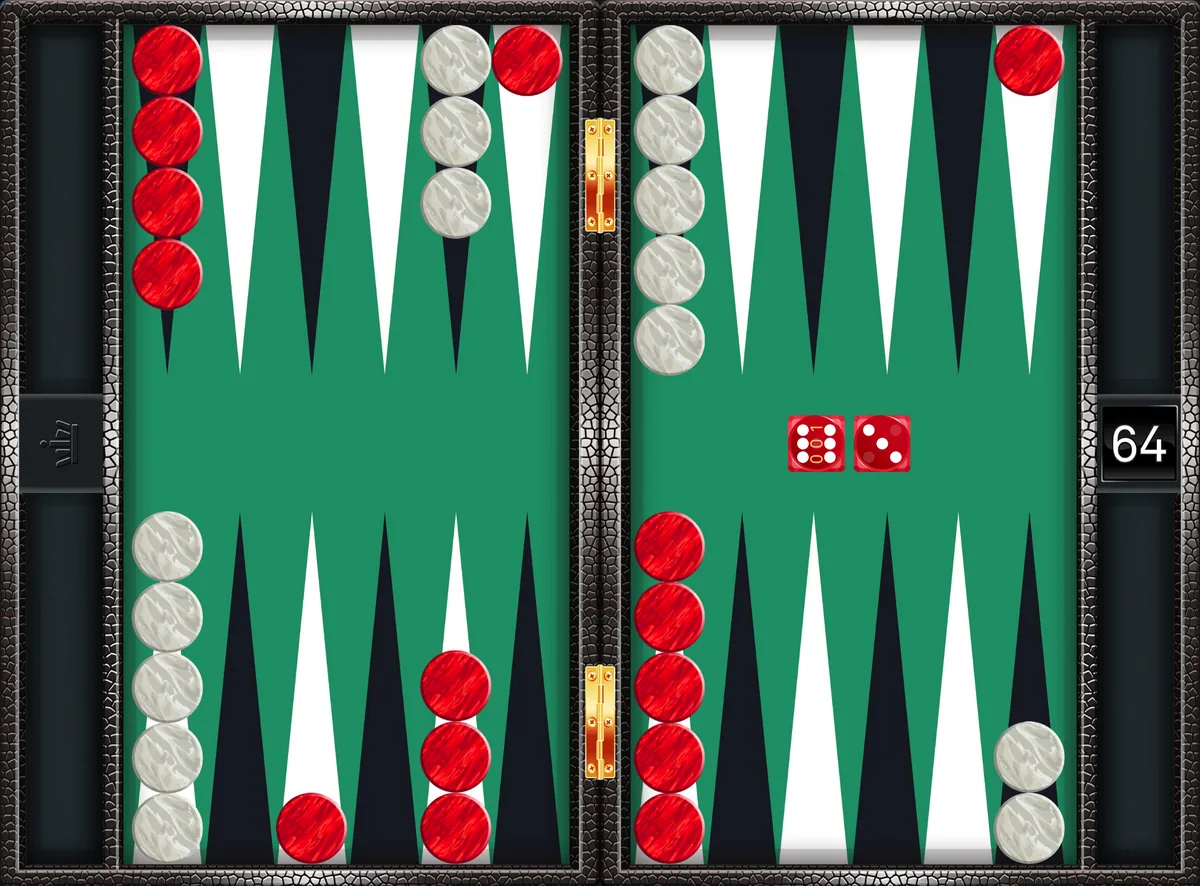
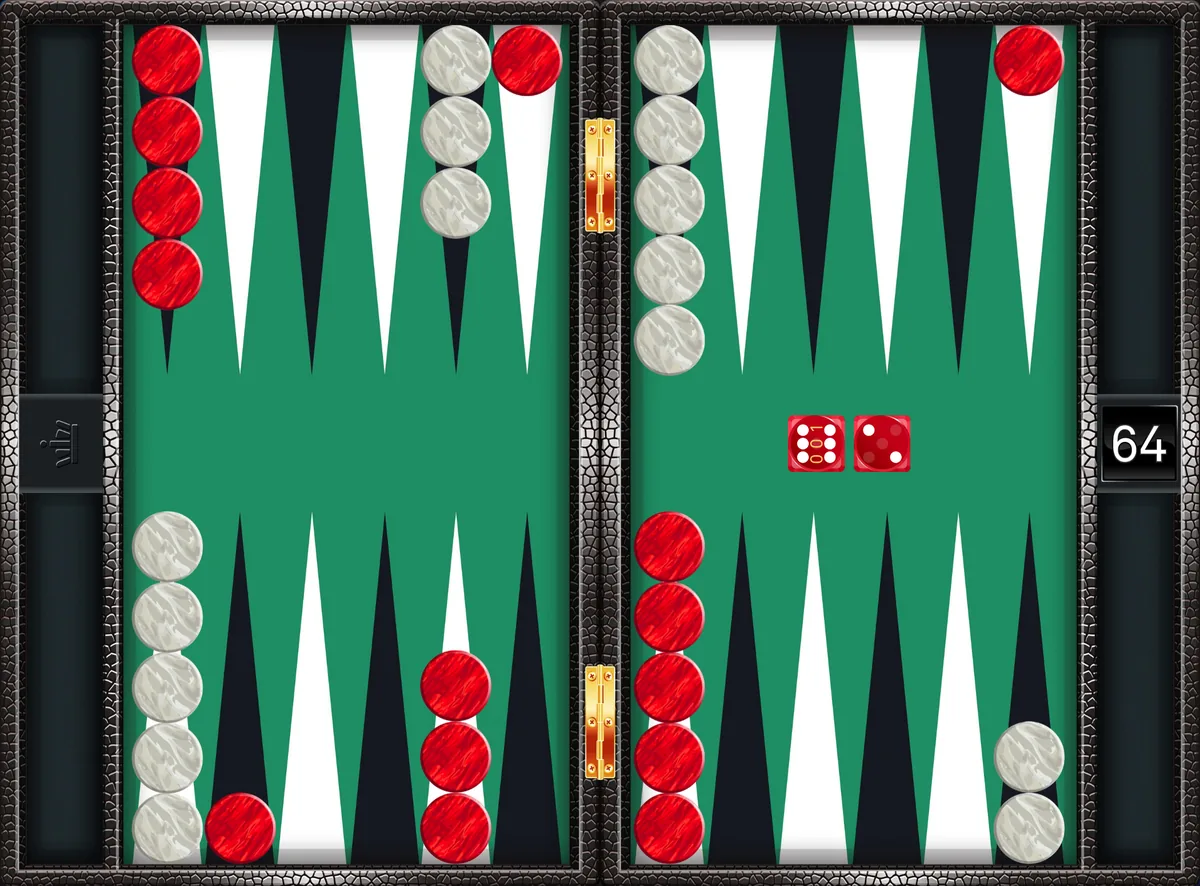
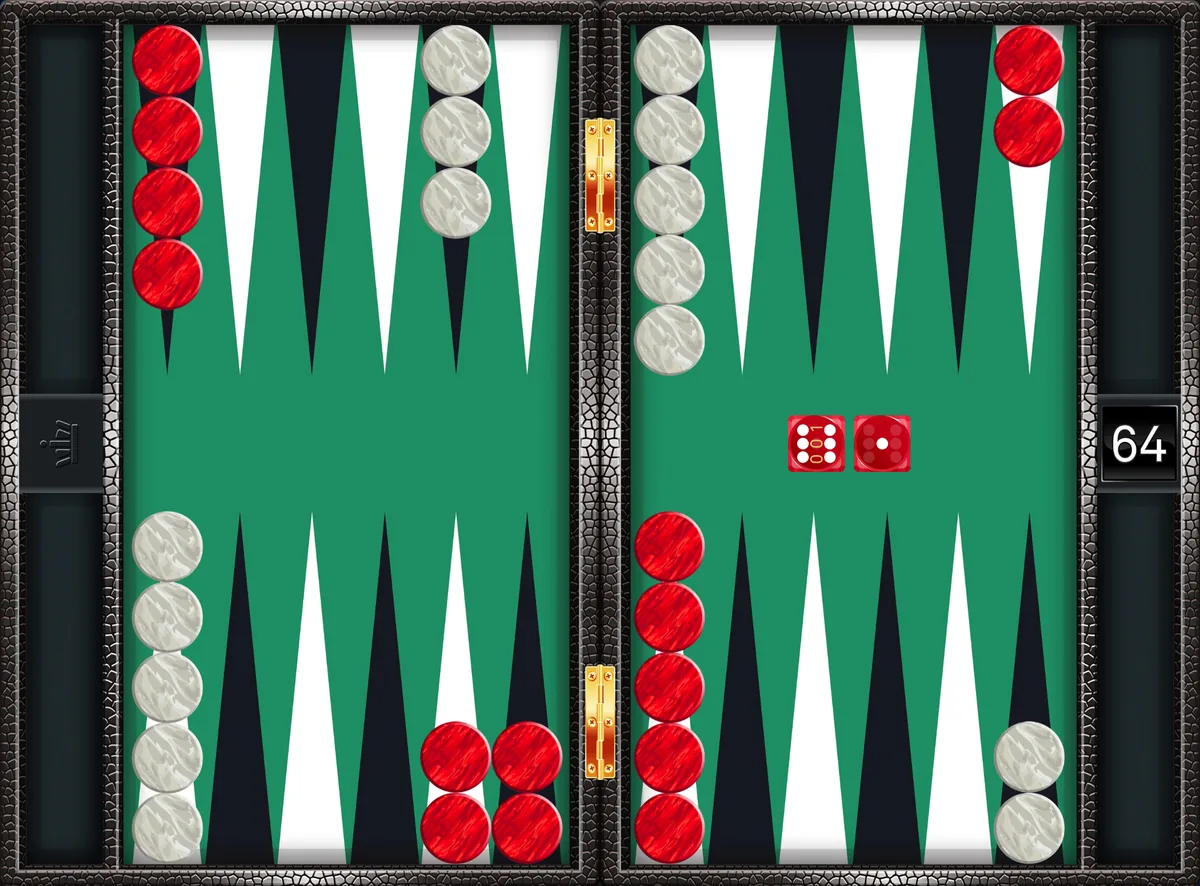
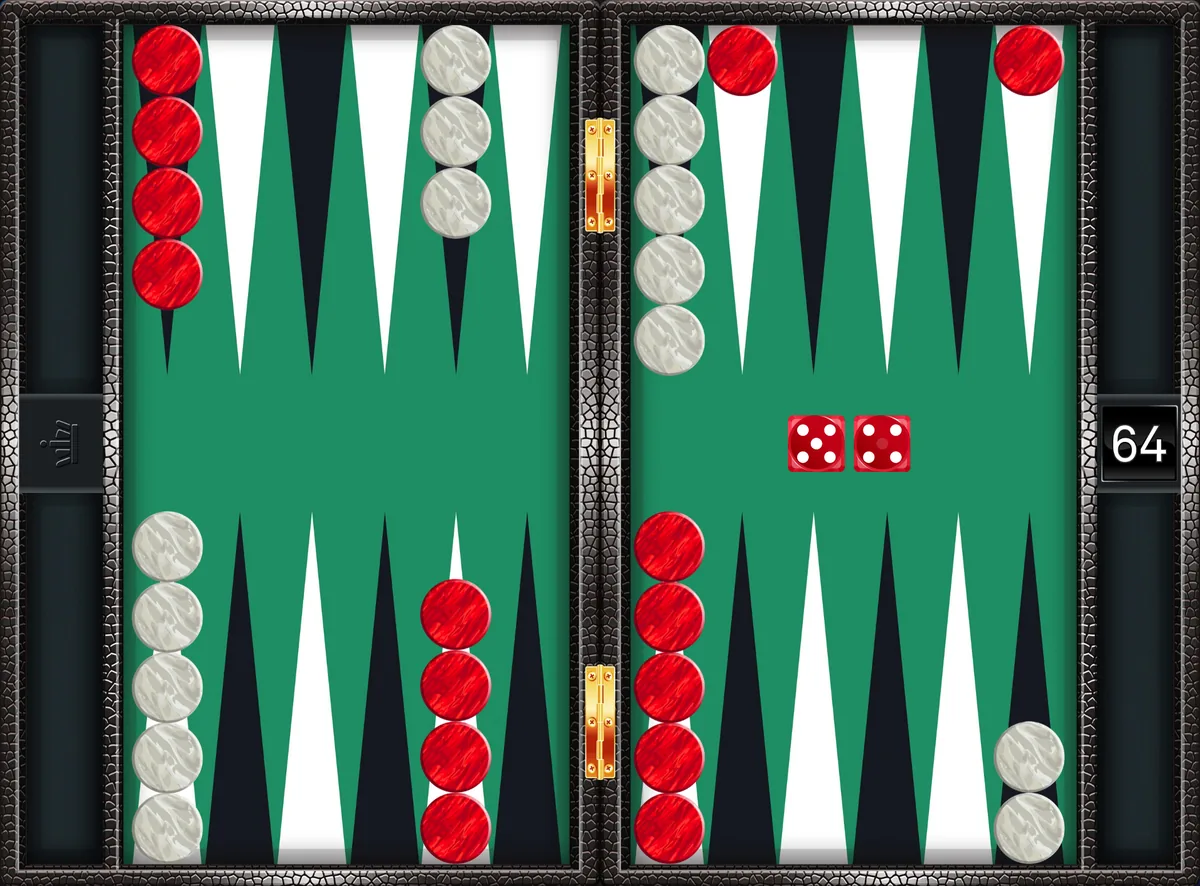
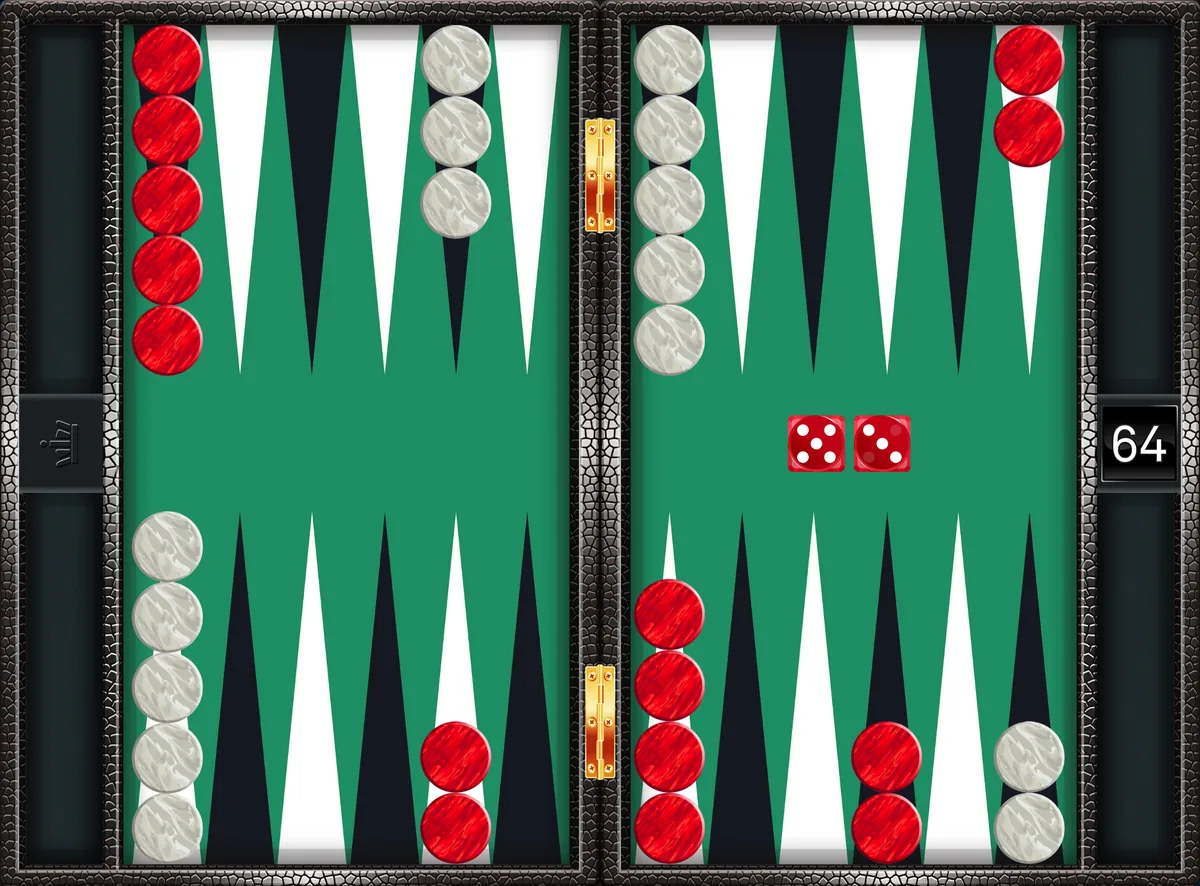
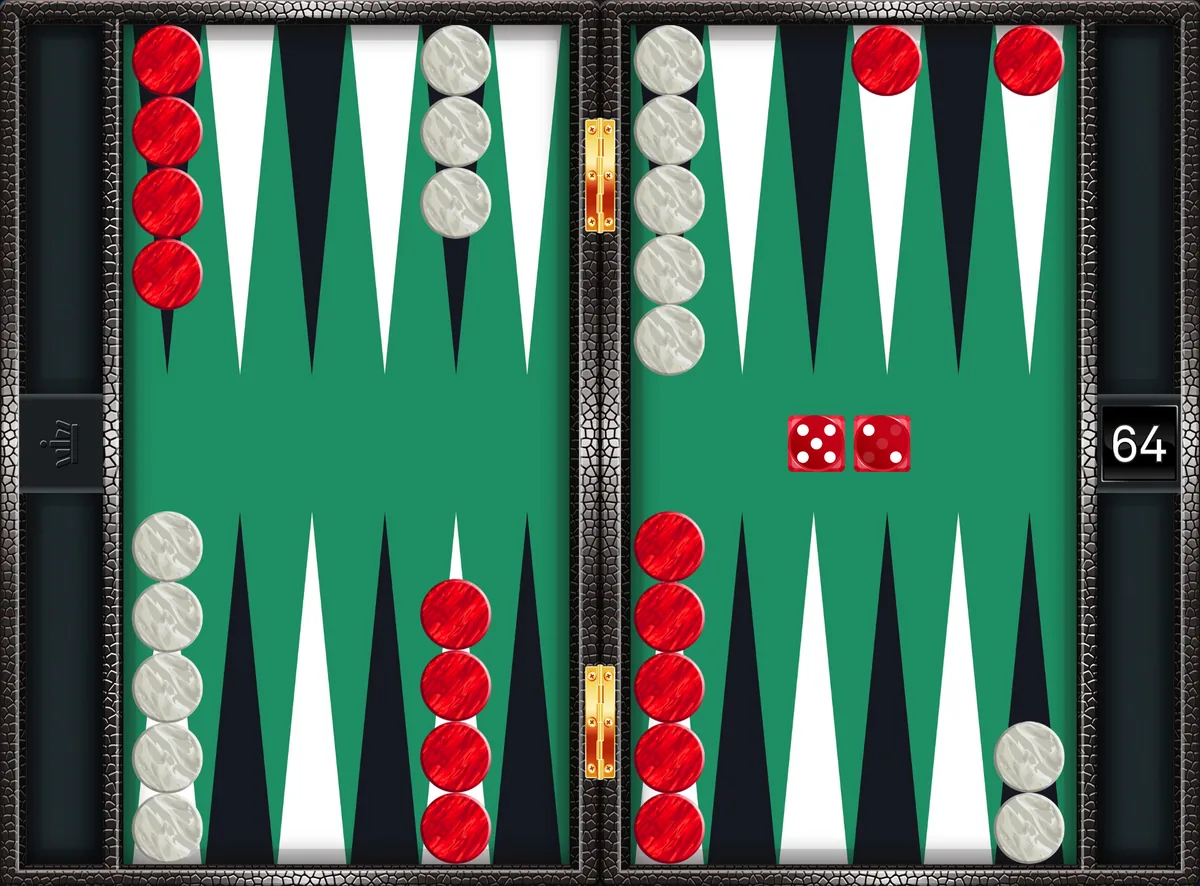
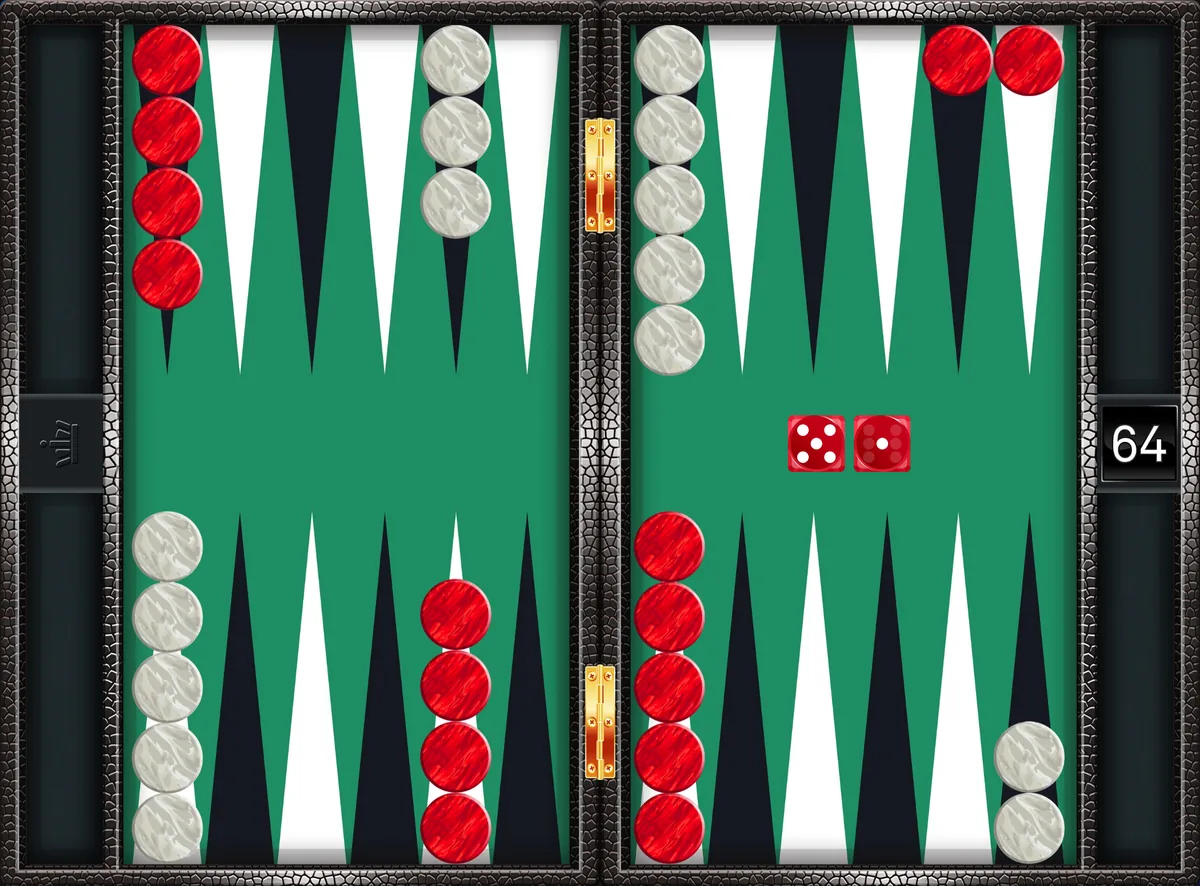
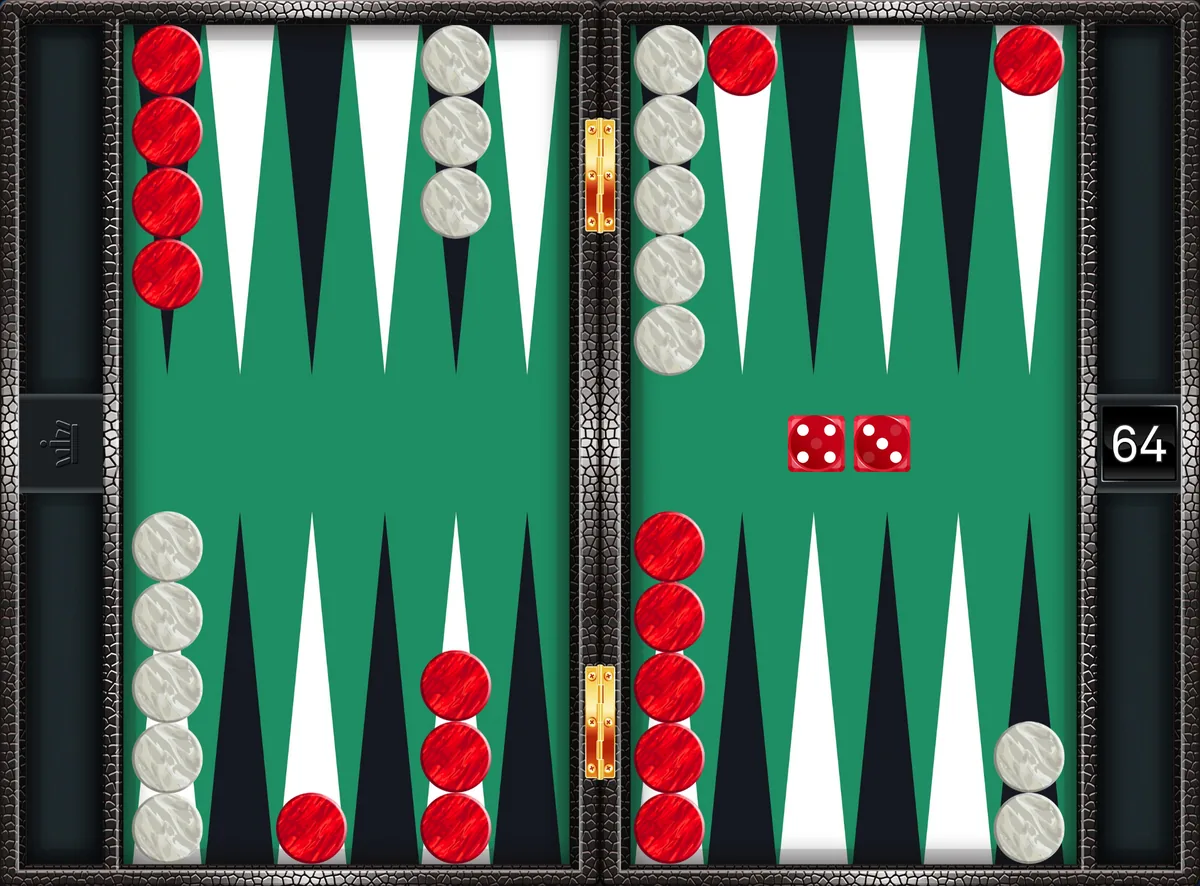
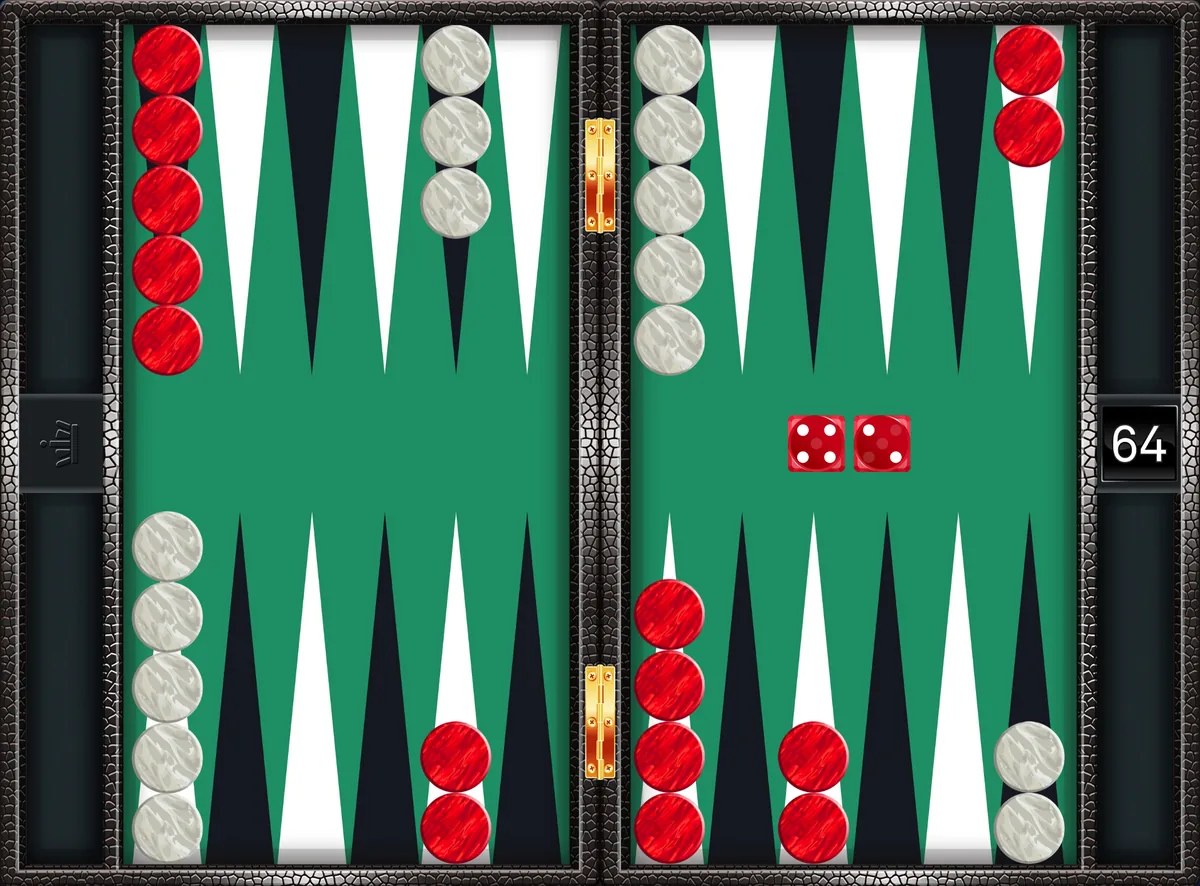
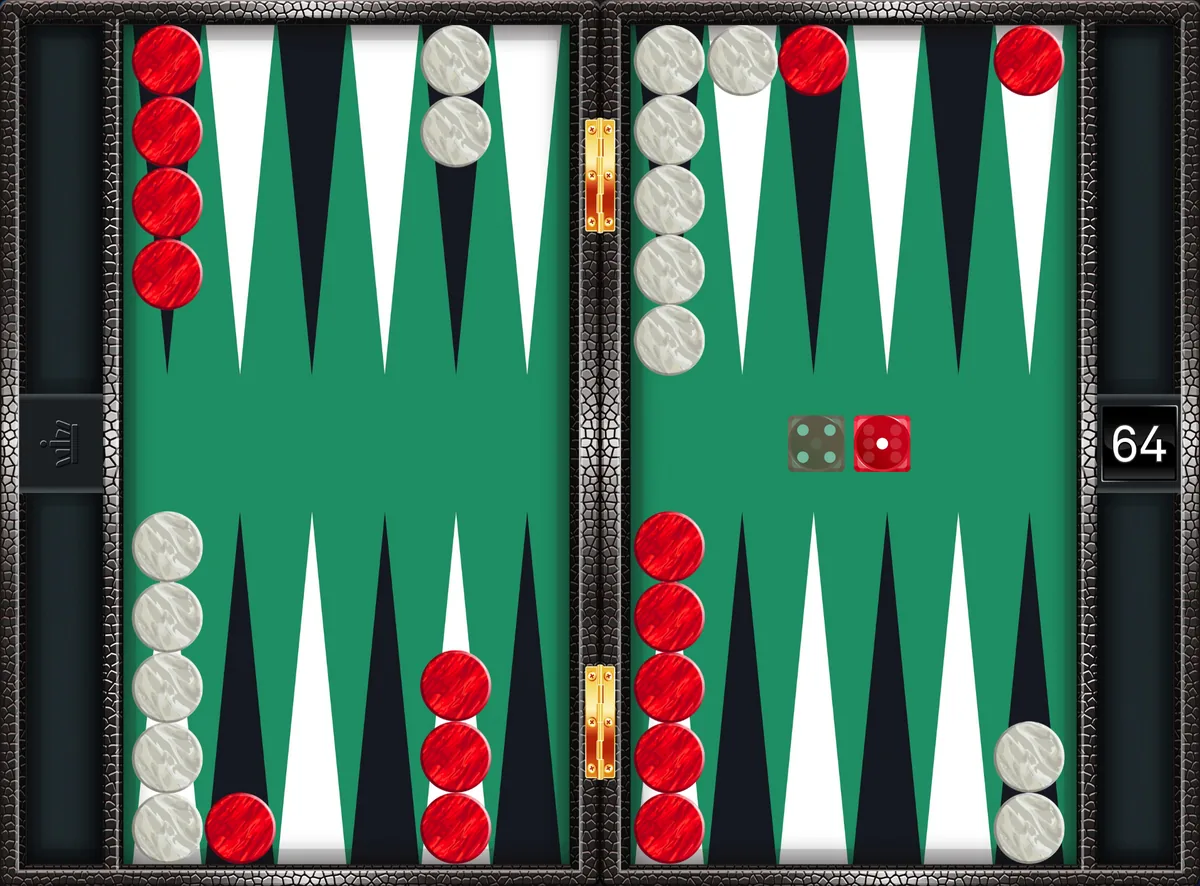
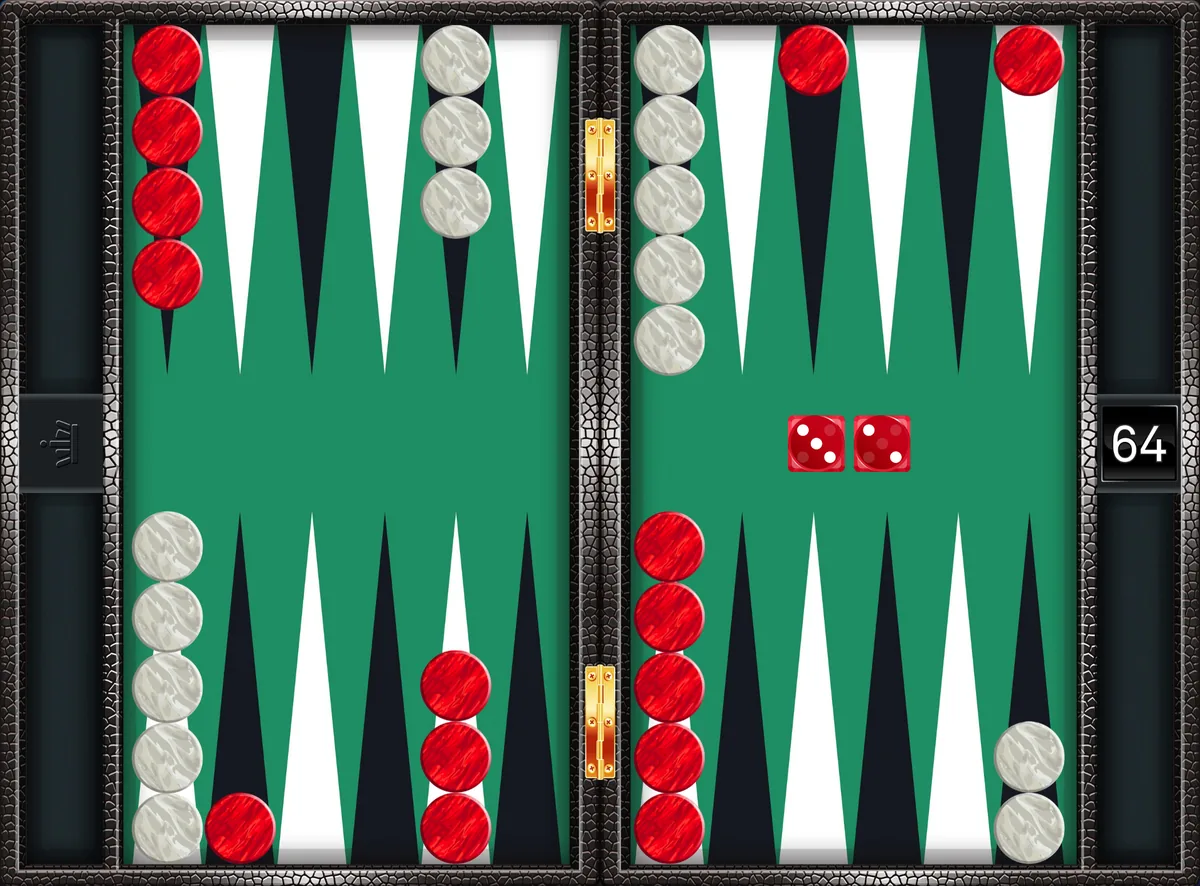
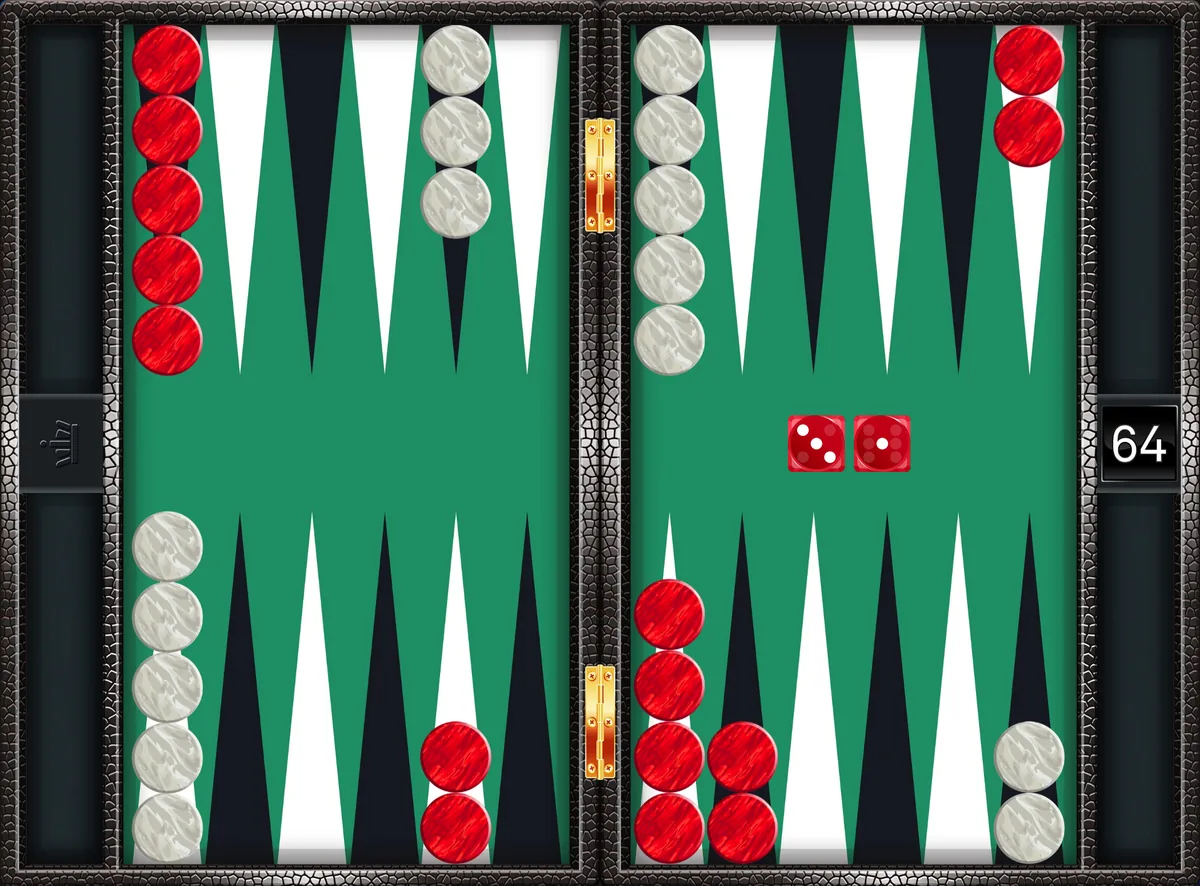
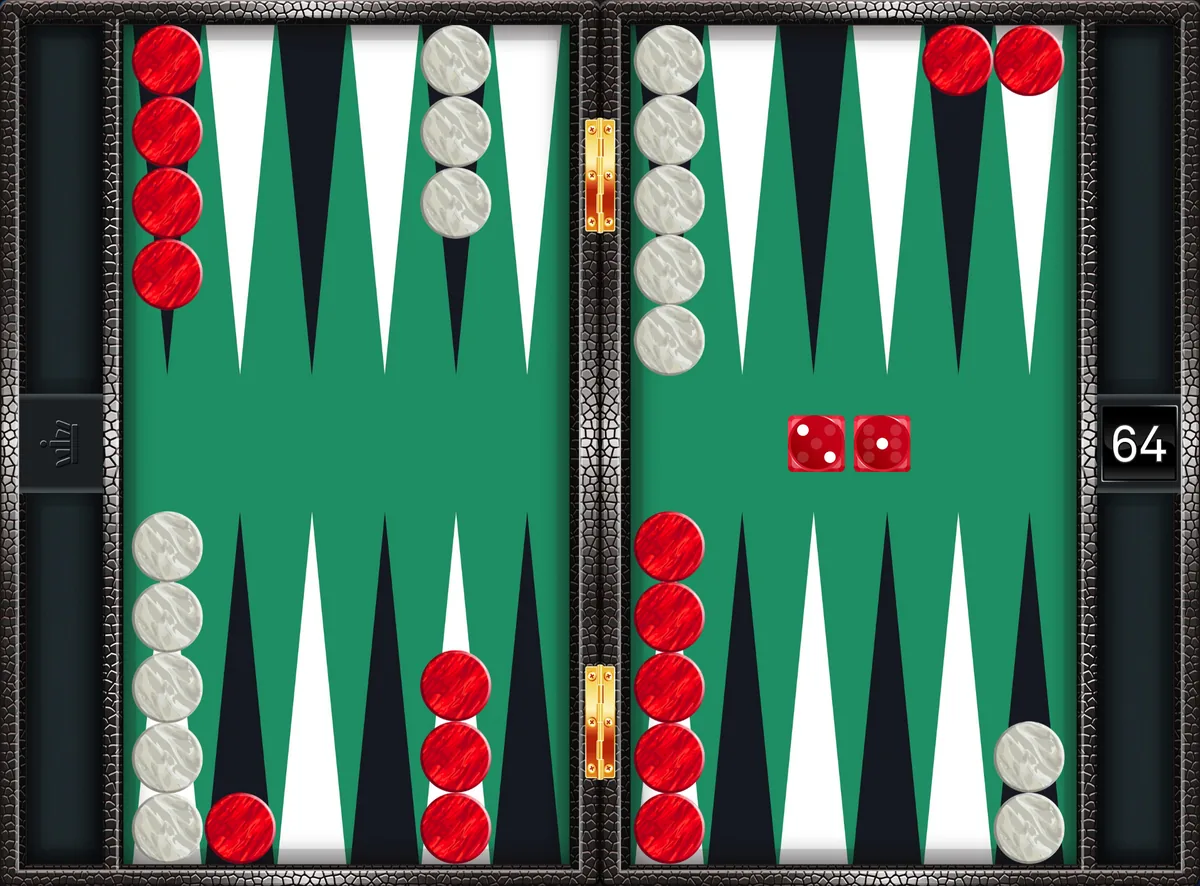
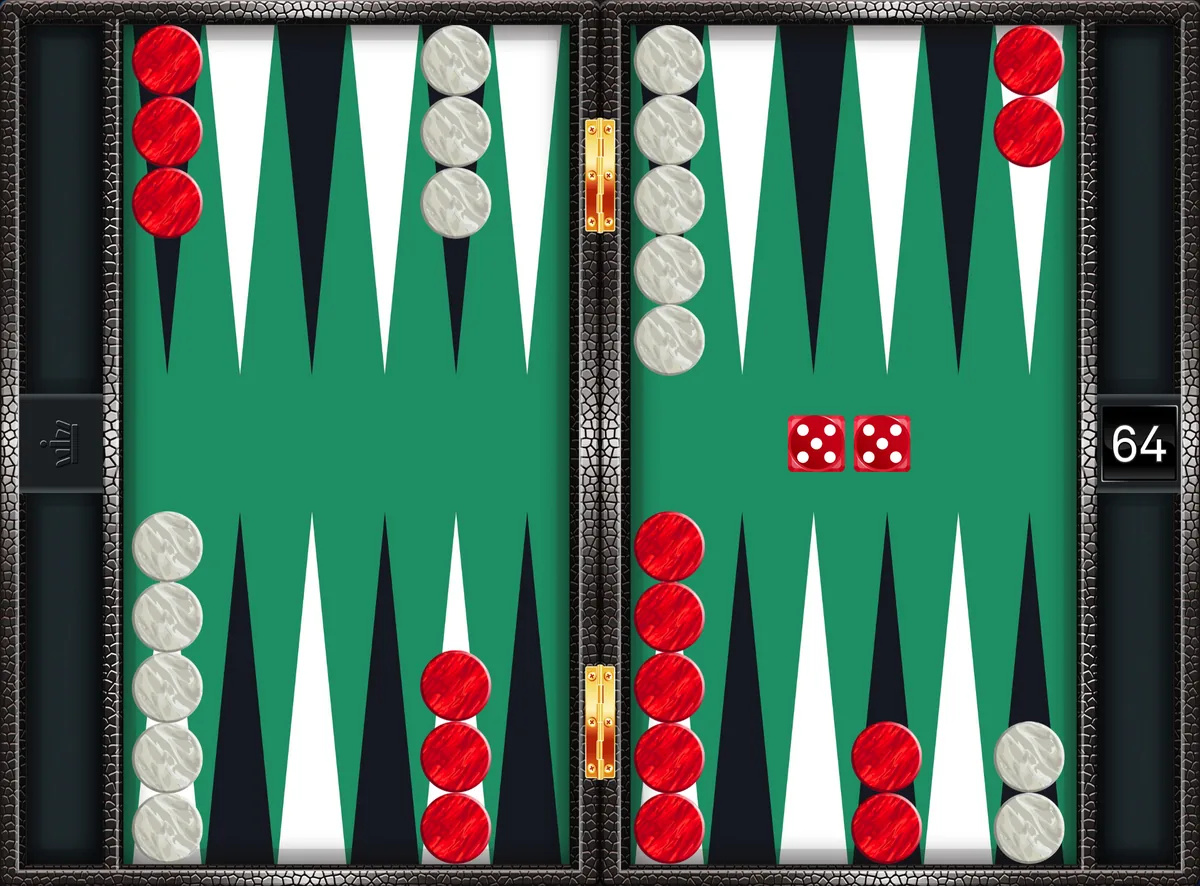
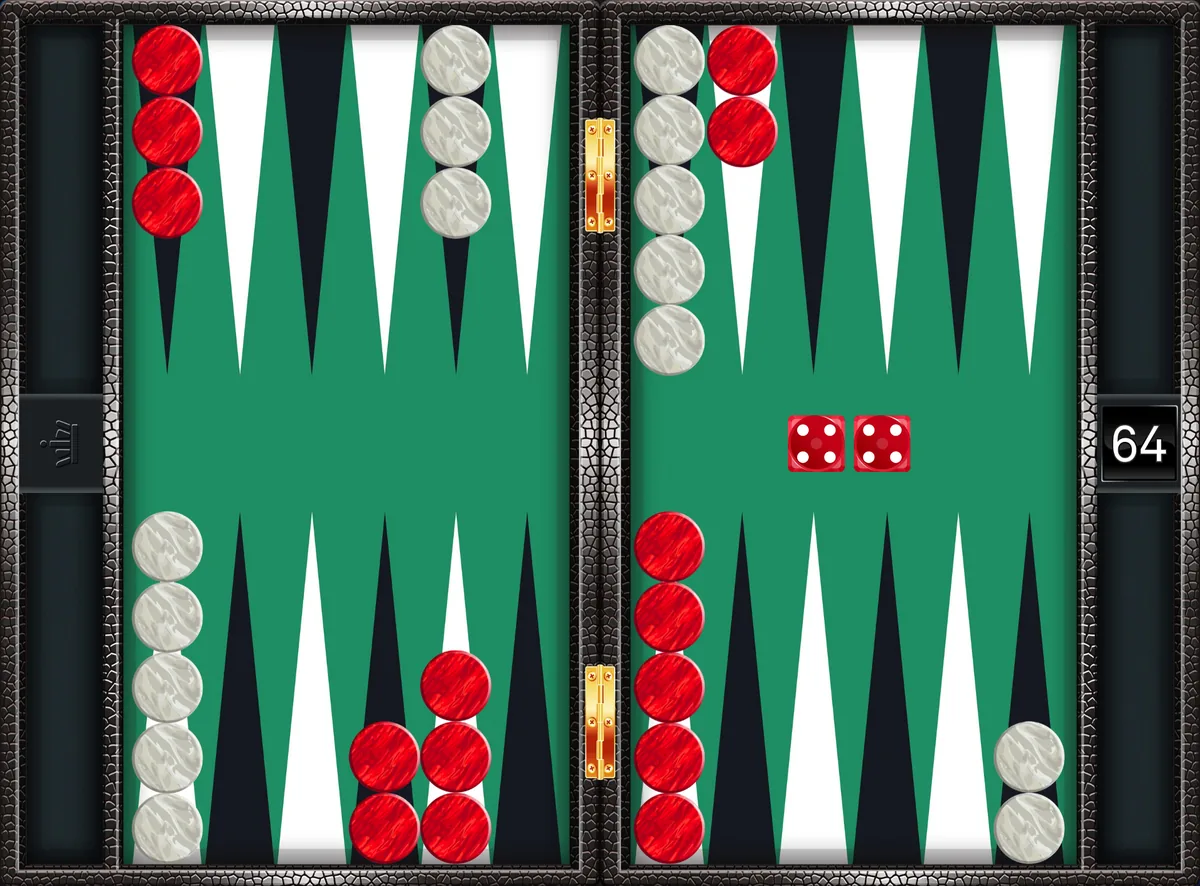
Each diagram shows the position after red (the player at the bottom, on roll) plays the canonical play from the table above. The dice show the roll.
Opening 6-5 — 24/18, 18/13: Lover's Leap.Opening 6-4 — 24/18, 13/9: the split-builder.Opening 6-3 — 24/18, 13/10: the split-builder.Opening 6-2 — 24/18, 13/11: the split-builder.Opening 6-1 — 13/7, 8/7: makes the bar-point.Opening 5-4 — 24/20, 13/8: the 24/20 split.Opening 5-3 — 8/3, 6/3: makes the 3-point.Opening 5-2 — 13/8, 24/22: the split.Opening 5-1 — 24/23, 13/8: the split.Opening 4-3 — 24/20, 13/10: the 24/20 split.Opening 4-2 — 8/4, 6/4: makes the 4-point.Opening 4-1 — 24/23, 13/9: the split.Opening 3-2 — 24/21, 13/11: the split-builder.Opening 3-1 — 8/5, 6/5: makes the Golden Point.Opening 2-1 — 24/23, 13/11: the split-builder.
The Five Strongest Opening Rolls
Five opening rolls produce a structurally decisive position on the first turn:
3-1 (make the 5-point / Golden Point) — the single strongest opening roll. The 5-point is the highest-priority point in the game. See Golden Point Strategy for the full treatment.
4-2 (make the 4-point) — second-strongest. The 4-point combines with the 6- and 8-points to form a 3-prime.
6-1 (make the bar-point) — third-strongest. The bar-point (7-point) is the link in any 4- or 5-prime extending from the 6-point.
5-3 (make the 3-point) — fourth-strongest. The 3-point is less ranked than the 4- or 5-point but is still a valuable home-board attack and trap point.
6-5 (Lover's Leap) — fifth-strongest. Not a point-making roll, but the optimal use of two large dice — running a back checker all the way to the midpoint.
These five rolls account for approximately 5×2/36=27.8% of all opening rolls. The 1-in-3.6 probability of one of these rolls is one of the principal sources of opening-game variance: the player who rolls one of these on the first turn has a measurable equity advantage of 0.04–0.08 over the player who does not, before any cube action.
The Two Weakest Opening Rolls
The two structurally weakest opening rolls are 2-1 and 5-1. Neither makes a point. The 2-1 is a near-tie between the split-builder and the slot of the 5-point — modern rollouts can favour either by a marginal amount depending on the engine and the rollout settings. The 5-1 has settled more firmly: the modern canonical play is the split (24/23, 13/8), and the older slotting alternative (13/8, 6/5) is meaningfully inferior in current XG2 and Wildbg analysis.
The opening principle for these weak rolls is that a small split with an outfield builder is generally preferred to either a pure split or a pure builder play — keeping the back checkers flexible while planting an outfield checker that can be covered next turn.
The 21-roll dice probability table — the foundation for every rollout calculation:
Roll
Probability
Cumulative
6-5
2/36 = 5.56%
5.56%
6-4
2/36
11.11%
6-3
2/36
16.67%
6-2
2/36
22.22%
6-1
2/36
27.78%
5-4
2/36
33.33%
5-3
2/36
38.89%
5-2
2/36
44.44%
5-1
2/36
50.00%
4-3
2/36
55.56%
4-2
2/36
61.11%
4-1
2/36
66.67%
3-2
2/36
72.22%
3-1
2/36
77.78%
2-1
2/36
83.33%
1-1
1/36 = 2.78%
86.11%
2-2
1/36
88.89%
3-3
1/36
91.67%
4-4
1/36
94.44%
5-5
1/36
97.22%
6-6
1/36
100.00%
In tournament opening rules, the doubles rows are excluded (reroll required), and the non-double probabilities re-normalise:
P(roll)=151=6.6% for each non-double opening roll.
Doubles — Best Plays in Response Position
Doubles cannot occur on the opening roll itself, because the standard opening protocol requires each player to roll a single die with non-matching values determining initiative. The table below therefore describes the best play for each doubles roll when it appears as the second player's response (or on any later turn, where the position resembles the standard opening setup closely enough that the canonical play remains the same).
In casual money play with automatic-double conventions, doubles may also appear on the first move as a stake-doubling event without a recorded play; the canonical plays below apply if the doubles roll is then played out normally.
Roll
Canonical play
Notes
6-6
24/18, 24/18, 13/7, 13/7
Makes both bar points: your own 7-point and an anchor on your opponent's bar point.
5-5
13/3, 13/3
Makes the 3-point with maximum aggression.
4-4
24/20, 24/20, 13/9, 13/9
Makes the advanced anchor (20-point) and the 9-point.
3-3
8/5, 8/5, 6/3, 6/3
Makes the 5-point and the 3-point — devastating opening.
2-2
13/11, 13/11, 6/4, 6/4
Makes the 4-point and the 11-point.
1-1
8/7, 8/7, 6/5, 6/5
Makes the bar-point and the 5-point in a single roll.
1-1, 3-3 and 4-4 each make two key points in one turn. With 5-5 the standard play, 13/3(2), makes the 3-point.
Because a tied opening throw is re-rolled, 1-1 can never be the first roll. It can, of course, occur on any later turn.
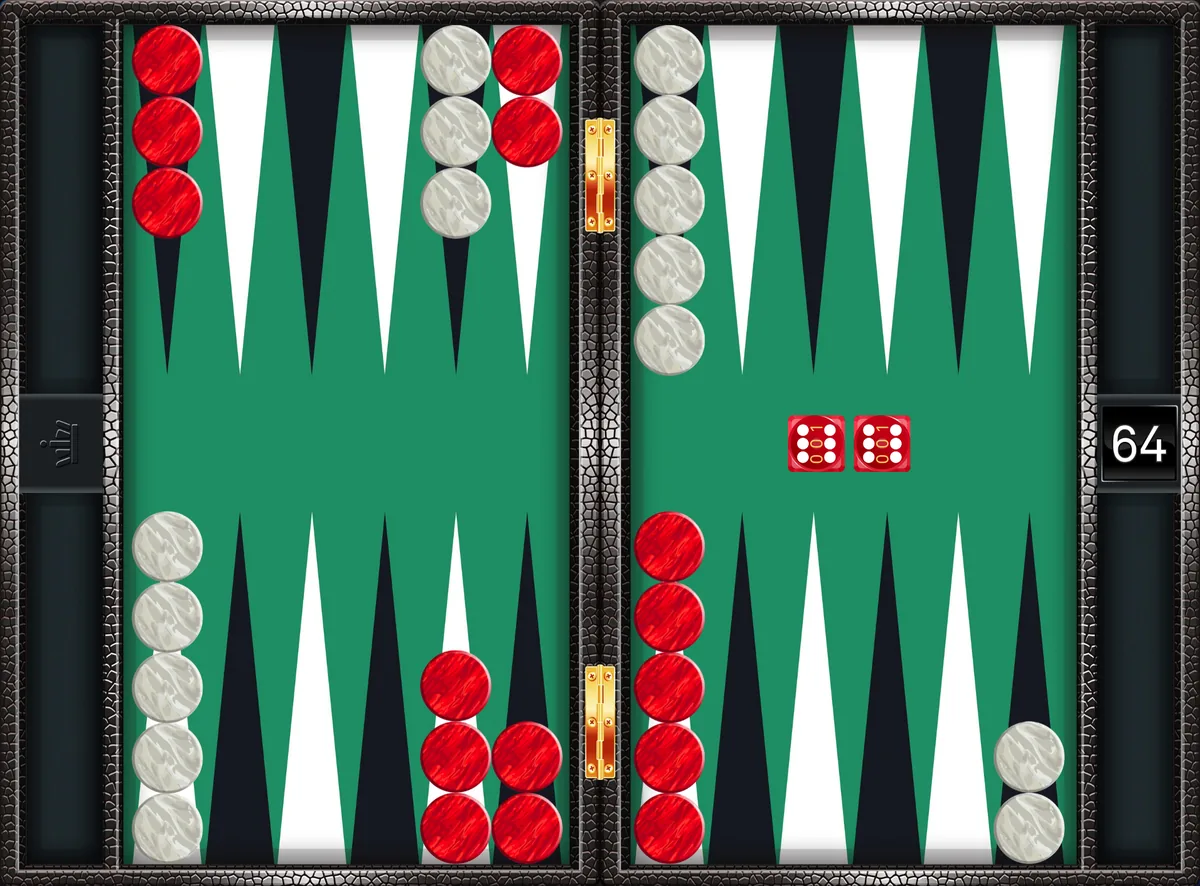
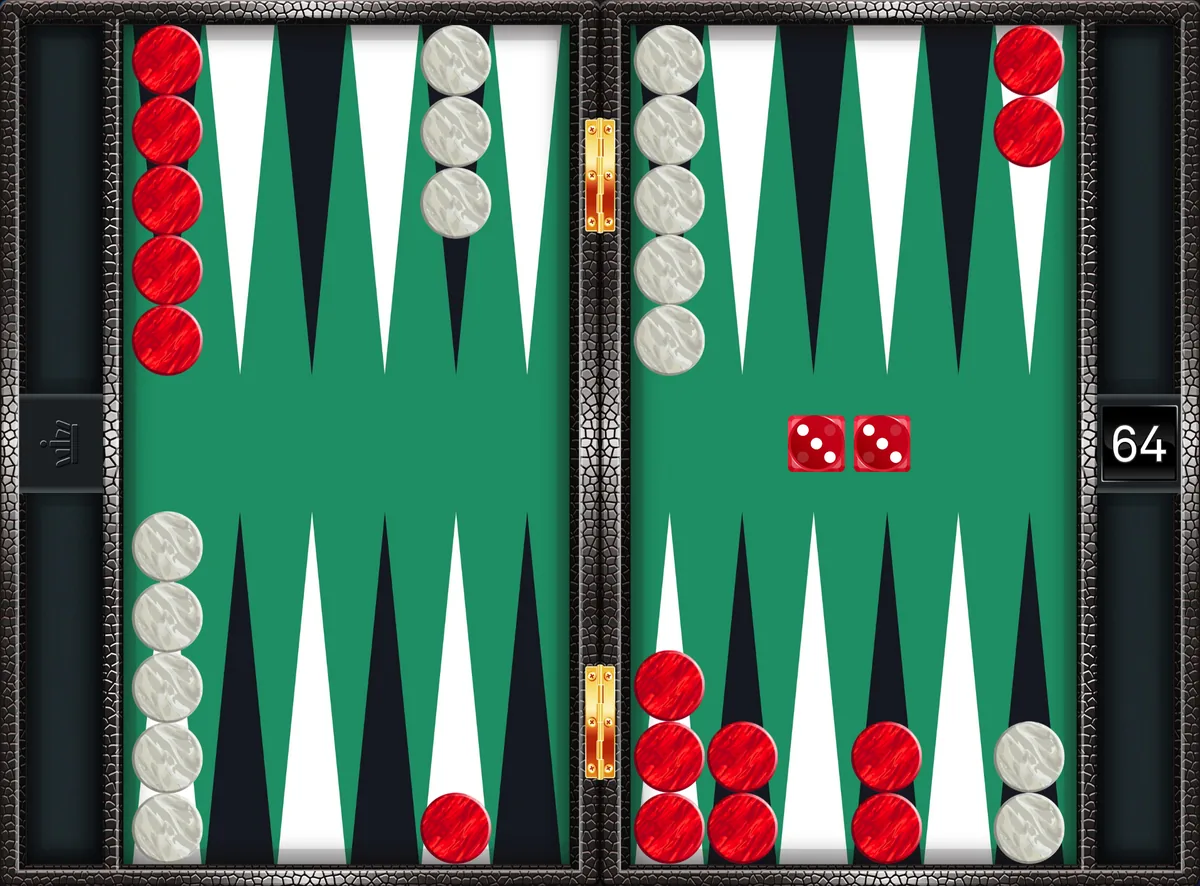
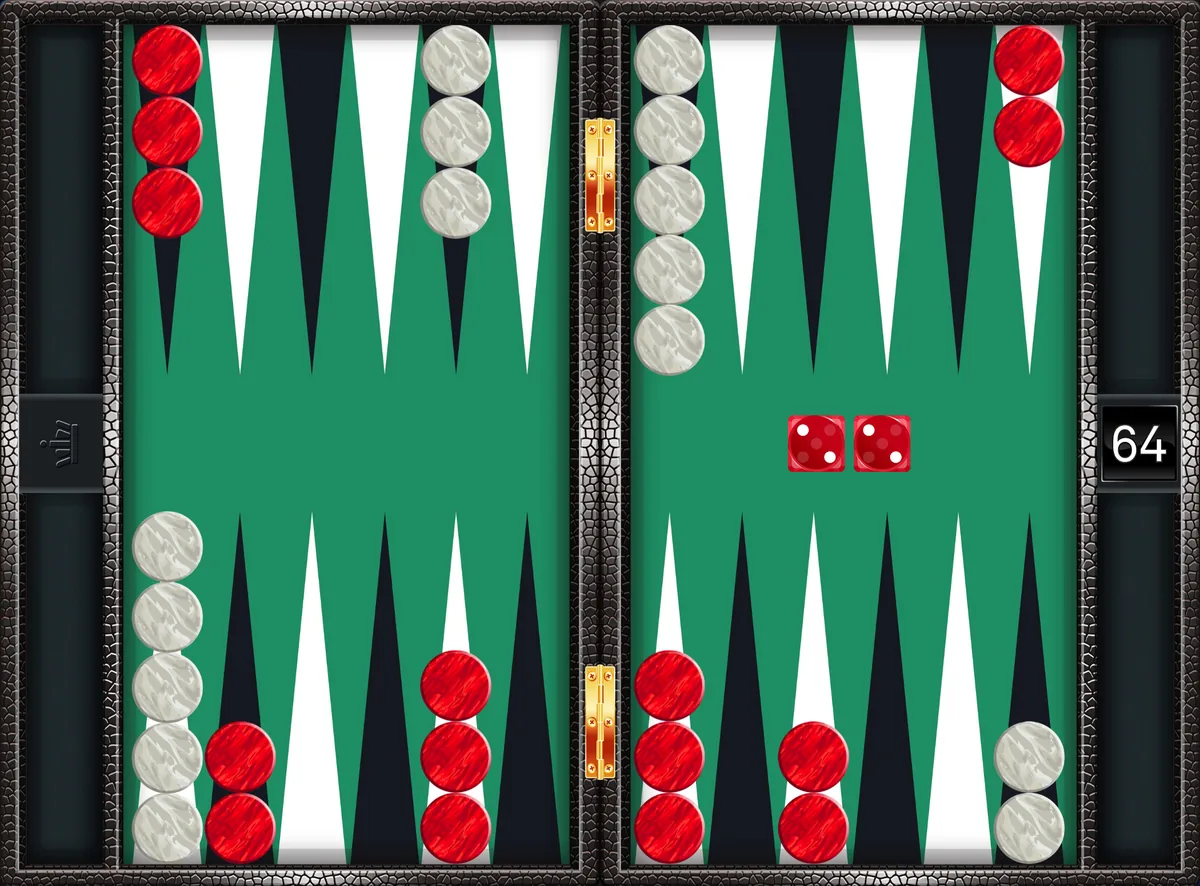
The six doubles plays, illustrated
6-6 — 24/18(2), 13/7(2): makes the bar-point, runs both back checkers.5-5 — 13/3(2): makes the 3-point.4-4 — 24/20(2), 13/9(2): makes the golden anchor and the 9-point.3-3 — 8/5(2), 6/3(2): makes the 5-point and the 3-point.2-2 — 13/11(2), 6/4(2): makes the 4-point and the 11-point.1-1 — 8/7(2), 6/5(2): makes the bar-point and the 5-point.
Opening Replies and the 630 Positional Combinations
After the first player makes their opening play, the second player rolls — and now any of the 21 possible dice combinations is available, including doubles. Combined with the approximately two acceptable plays per first-turn roll for the first player (averaging across the 15 rolls produces ~30 distinct positions reached at the end of turn 1), the second player's universe of possible positions is:
30×21=630 distinct second-turn positions
This is the opening reply problem. Modern engine analysis has rolled out the full grid; the standard reference is the "second-turn equity table" maintained in the GNU Backgammon and eXtreme Gammon rollout databases. The full table is impractical to memorise, but the structural patterns are not.
The three reply archetypes
Across the 630 second-turn positions, three structural archetypes account for the bulk of the strategic content:
First player has made the 5-point, 4-point, or bar-point. The second player's reply is dominated by the question of whether to make a parallel point of their own. The canonical response is to make a point if possible (e.g., second player rolls 3-1 in response → make own 5-point) and otherwise to anchor or split with a deep builder (e.g., second player rolls 4-2 → 8/4 6/4, even though their opponent has already made a home-board point).
First player has run with 6-5 or 6-4 (Lover's Leap / Run). The second player's reply hinges on whether to chase with a parallel run or to commit to a building game. Generally, make a point if possible, split otherwise. Running with the second player rarely matches the equity of point-making.
First player has played a builder-split (e.g., 4-1 split, 2-1 split). The second player has a fresh tempo opportunity. Hit any blot the first player has left if a hit is available; otherwise play structurally.
The hitting window
Several first-turn plays leave blots within direct-shot range of the second player's back checkers. The most-cited cases:
First player slots the 5-point (4-1 slot, or 13/8 6/5 alternative on 5-1): the second player's back checkers on the 24-point reach that point with a 4 — any roll containing a 4, plus 3-1, 2-2 and 1-1 — 15 rolls of 36, ≈41.7% hit probability.
First player slots the bar-point: the back checkers reach the 7-point with a 6 — any roll containing a 6, plus 5-1, 4-2, 3-3 and 2-2 — 17 rolls of 36, ≈47.2% hit probability.
The slot-vs-hit math is foundational. When the first player slots the 5-point on a 4-1 roll, the second player hits roughly 42% of the time and is structurally favoured after a hit. The 58% no-hit case leaves the first player with a covered 5-point and a significant positional edge. The expected-value calculation across the two outcomes is why the 4-1 slot stays close to the split in modern rollouts — close enough to remain a defensible alternative, though the split is the canonical play (see the table above).
Where Opening Theory Is Still Open
A small number of opening rolls remain meaningfully contested at the engine level:
2-1: the split-builder and the slot of the 5-point are within roughly a millipoint of each other in modern rollouts; the consensus shifts with engine version and rollout settings.
Rolls where the second-best alternative is within a small equity gap (a few millipoints) — typically the split-vs-builder choices on 3-2 and 5-4 — where over-the-board choice can reasonably go either way.
The rolls that used to be contested — particularly 4-1 and 5-1 — have settled in the modern engine consensus toward the split-builder play and away from the older 1970s pure-style slot. Tournament-level players choose between the remaining genuinely-tied plays based on opponent-modelling (against a holding-game-prone opponent, the split plays gain value; against a positional opponent, the slot plays gain value), score context (match-equity gammon prices shift the calculation), and personal style. Engine rollouts at deeper plies are the only formal authority for the contested cases.
Glossary — formal definitions for Lover's Leap, Golden Point, slot, split, builder.
Board Setup — step-by-step placement of all thirty checkers, and the variant setups.
How to Play Backgammon — the beginner's guide: the rules in plain language, in fifteen minutes.
A new backgammon world is opening.
Imagine online backgammon as a living world, where you compete against over 500 unique personalities from 120 countries. Every member has their own character, life story, voice, playing strength and style. They compete in the same leagues and tournaments as you, build careers alongside yours and remember the matches, conversations and history you create together.
Learn who they are. Adapt to how they play. Earn their respect, make friends, create rivalries and become part of their story—because they will become part of yours.